
Cloud computing has become an essential part of modern technology. From hosting websites to storing files and running business applications, cloud computing allows people and businesses to access powerful computing resources over the internet without purchasing and maintaining their own physical servers.
In this guide, we explore what cloud computing is, how it works, its main types, and why it matters for modern businesses.
What Is Cloud Computing?
Cloud computing is the delivery of computing services over the internet, including servers, storage, databases, networking, and software.
Instead of investing in expensive hardware, businesses can rent computing resources from cloud providers and pay according to their chosen pricing model.
For example, Google Drive uses cloud storage, while businesses use cloud servers to host websites, applications, and databases.
How Does Cloud Computing Work?
Cloud computing operates through data centers equipped with physical servers, storage systems, and networking infrastructure.
Virtualization and automated management tools allow providers to allocate resources to different customers. Users can access these services through the internet, dashboards, or APIs.
This makes it possible to launch applications, expand storage, and increase computing capacity without purchasing additional physical hardware.
Main Types of Cloud Computing
1. Public Cloud
Public cloud services are provided by companies such as Amazon Web Services (AWS), Microsoft Azure, and Google Cloud. They offer flexible infrastructure and managed services for businesses of different sizes.
2. Private Cloud
Private cloud infrastructure is dedicated to one organization, providing greater control over its environment and configurations.
3. Hybrid Cloud
Hybrid cloud combines private infrastructure with public cloud services, allowing businesses to choose where different applications and workloads operate.
Cloud Computing Service Models
- Infrastructure as a Service (IaaS): Provides virtual servers, storage, and networking.
- Platform as a Service (PaaS): Provides tools and environments for building and deploying applications.
- Software as a Service (SaaS): Delivers ready-to-use software through the internet.
- Serverless Computing: Allows developers to run code without directly managing servers.
Each model offers a different balance of flexibility, control, and management responsibility.
Benefits of Cloud Computing
Cloud computing offers several advantages:
- Cost efficiency: Reduces the need for upfront hardware investment.
- Scalability: Allows resources to grow or shrink with demand.
- Flexibility: Enables access to services from different locations.
- Faster deployment: Helps businesses launch applications quickly.
- Backup and recovery: Supports data protection and disaster recovery when configured properly.
- Innovation: Provides access to AI, analytics, and modern development tools.
However, cloud services are not automatically cheaper or more secure. Businesses must manage costs, configure security correctly, and maintain reliable backups.
Cloud Computing vs. Traditional Hosting
Traditional hosting often uses fixed resource allocations, while cloud platforms can provide more flexible provisioning and scaling.
Shared hosting is usually suitable for small websites, VPS hosting offers greater control over allocated resources, and cloud infrastructure can support applications with changing demands.
The best option depends on your budget, technical requirements, expected traffic, and business goals.
The Future of Cloud Computing
Cloud computing continues to evolve alongside artificial intelligence, edge computing, automation, and data analytics.
Businesses increasingly use cloud infrastructure to develop applications, process large amounts of data, and deliver digital services worldwide. Efficient resource management and stronger security practices will remain important as these technologies advance.
Conclusion
Cloud computing has transformed how individuals and businesses use technology. By providing flexible access to computing resources, it helps organizations build, deploy, and manage digital services more efficiently.
Whether you are starting a website, developing software, or growing a business, understanding cloud computing can help you make better technology decisions.
Follow Ekuraa for more informative articles about cloud computing, web hosting, cybersecurity, and emerging technologies.
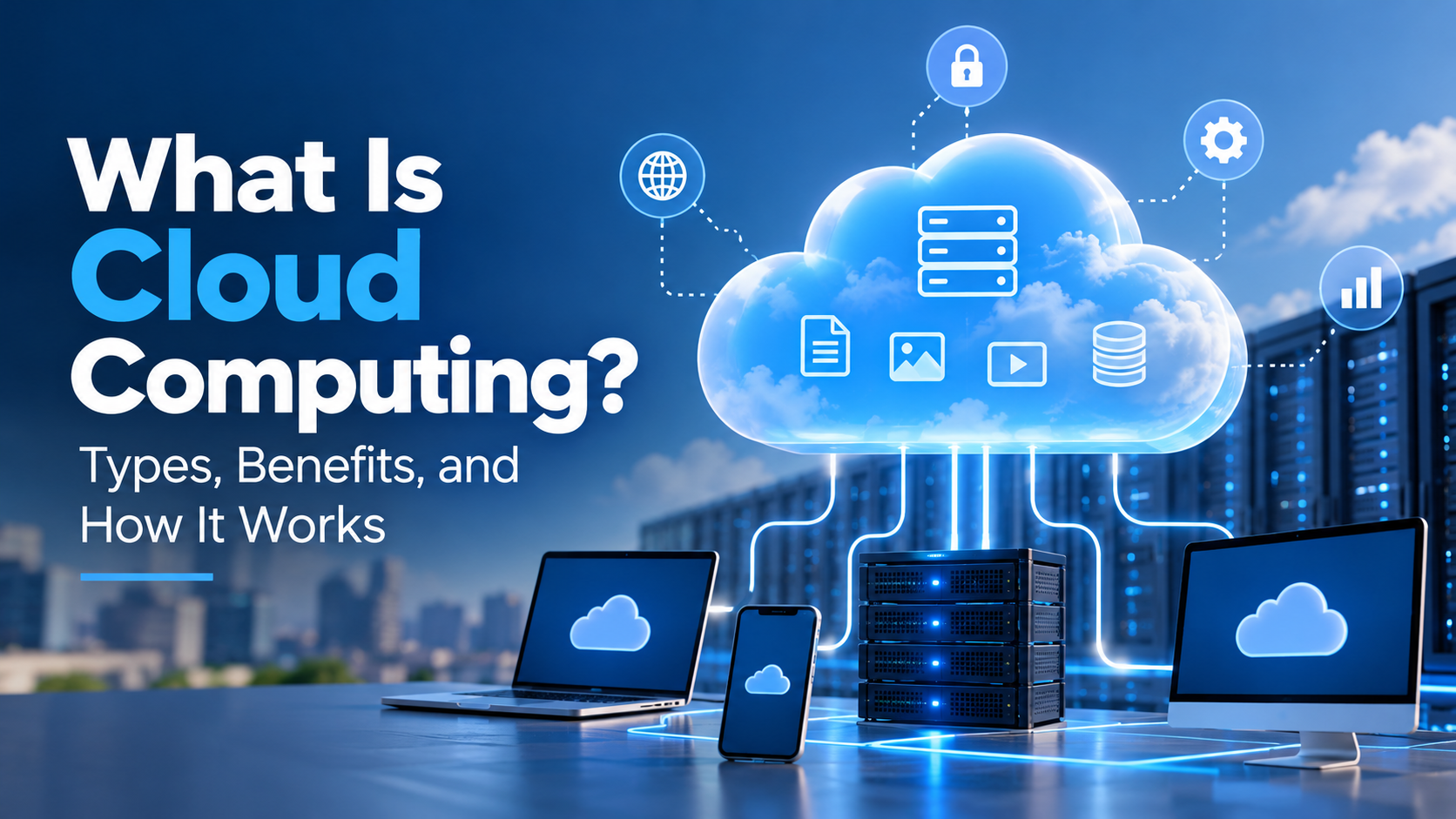
In this guide, we explore what cloud computing is, how it works, its main types, and why it matters for modern businesses.
What Is Cloud Computing?
Cloud computing is the delivery of computing services over the internet, including servers, storage, databases, networking, and software.
Instead of investing in expensive hardware, businesses can rent computing resources from cloud providers and pay according to their chosen pricing model.
For example, Google Drive uses cloud storage, while businesses use cloud servers to host websites, applications, and databases.
How Does Cloud Computing Work?
Cloud computing operates through data centers equipped with physical servers, storage systems, and networking infrastructure.
Virtualization and automated management tools allow providers to allocate resources to different customers. Users can access these services through the internet, dashboards, or APIs.
This makes it possible to launch applications, expand storage, and increase computing capacity without purchasing additional physical hardware.
Main Types of Cloud Computing
1. Public Cloud
Public cloud services are provided by companies such as Amazon Web Services (AWS), Microsoft Azure, and Google Cloud. They offer flexible infrastructure and managed services for businesses of different sizes.
2. Private Cloud
Private cloud infrastructure is dedicated to one organization, providing greater control over its environment and configurations.
3. Hybrid Cloud
Hybrid cloud combines private infrastructure with public cloud services, allowing businesses to choose where different applications and workloads operate.
Cloud Computing Service Models
- Infrastructure as a Service (IaaS): Provides virtual servers, storage, and networking.
- Platform as a Service (PaaS): Provides tools and environments for building and deploying applications.
- Software as a Service (SaaS): Delivers ready-to-use software through the internet.
- Serverless Computing: Allows developers to run code without directly managing servers.
Each model offers a different balance of flexibility, control, and management responsibility.
Benefits of Cloud Computing
Cloud computing offers several advantages:
- Cost efficiency: Reduces the need for upfront hardware investment.
- Scalability: Allows resources to grow or shrink with demand.
- Flexibility: Enables access to services from different locations.
- Faster deployment: Helps businesses launch applications quickly.
- Backup and recovery: Supports data protection and disaster recovery when configured properly.
- Innovation: Provides access to AI, analytics, and modern development tools.
However, cloud services are not automatically cheaper or more secure. Businesses must manage costs, configure security correctly, and maintain reliable backups.
Cloud Computing vs. Traditional Hosting
Traditional hosting often uses fixed resource allocations, while cloud platforms can provide more flexible provisioning and scaling.
Shared hosting is usually suitable for small websites, VPS hosting offers greater control over allocated resources, and cloud infrastructure can support applications with changing demands.
The best option depends on your budget, technical requirements, expected traffic, and business goals.
The Future of Cloud Computing
Cloud computing continues to evolve alongside artificial intelligence, edge computing, automation, and data analytics.
Businesses increasingly use cloud infrastructure to develop applications, process large amounts of data, and deliver digital services worldwide. Efficient resource management and stronger security practices will remain important as these technologies advance.
Conclusion
Cloud computing has transformed how individuals and businesses use technology. By providing flexible access to computing resources, it helps organizations build, deploy, and manage digital services more efficiently.
Whether you are starting a website, developing software, or growing a business, understanding cloud computing can help you make better technology decisions.
Follow Ekuraa for more informative articles about cloud computing, web hosting, cybersecurity, and emerging technologies.
