
AI Data Centers and the Environment: What Is the Real Cost of Artificial Intelligence?
Artificial intelligence is growing rapidly, powering chatbots, search engines, image generators, and countless other digital services. But behind every AI response is physical infrastructure that requires electricity, cooling, water, and land.
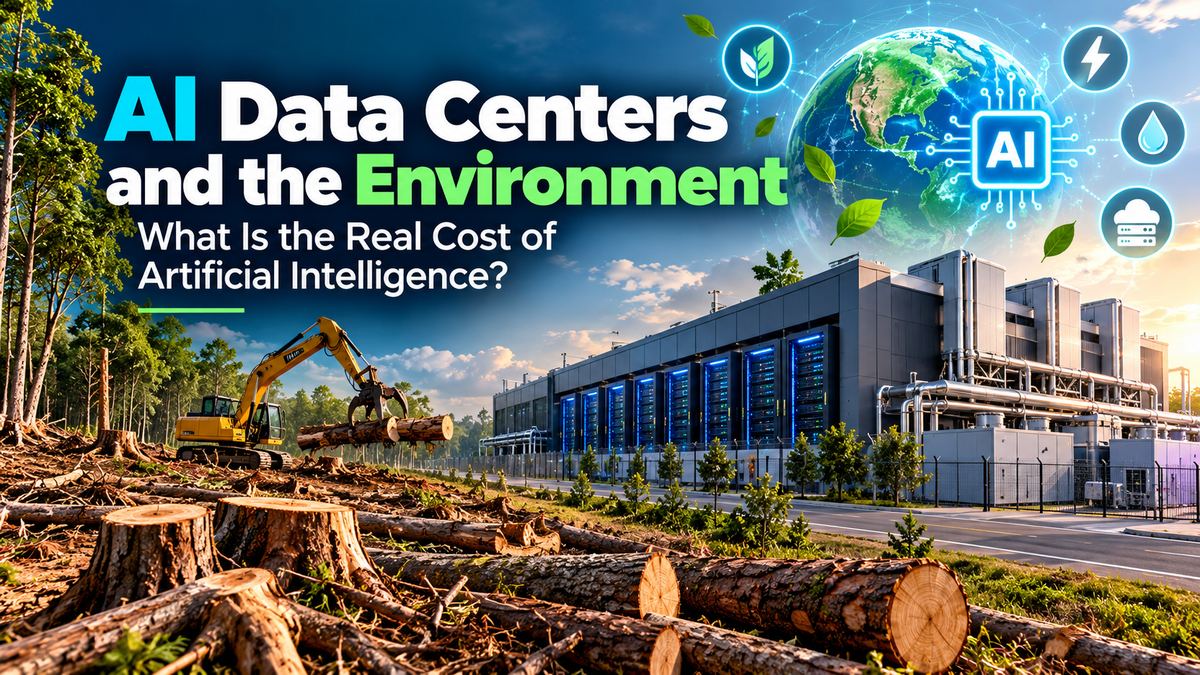
A viral social media post recently claimed that Google cut down 250,000 trees to build a data center. The specific claim needs independent verification, but it raises an important question: What is the environmental impact of AI data centers?
Why Do AI Data Centers Need So Many Resources?
AI systems run on powerful servers housed in data centers. These facilities consume electricity, generate heat, and require cooling systems to maintain reliable operation. Building new facilities can also affect local land use, vegetation, and ecosystems.
As demand for AI grows, so does the need for computing infrastructure. This makes energy efficiency and responsible site selection increasingly important.
Can AI Become More Environmentally Friendly?
Yes, although it requires deliberate action. Technology companies can reduce environmental impacts by using renewable electricity, improving server efficiency, adopting more efficient cooling systems, and choosing locations that minimize ecological damage.
Protecting forests and local ecosystems should also be considered when planning new data centers. Replanting trees can help, but it does not immediately replace the ecological value of mature forests.
Finding the Balance Between AI and Sustainability
AI offers significant benefits in healthcare, education, business, and scientific research. However, technological progress should not come at the expense of environmental responsibility.
As AI adoption accelerates, companies should be transparent about their energy use, water consumption, land development, and sustainability commitments.
The bottom line: AI innovation and environmental protection should advance together. The future of AI depends not only on how powerful our technology becomes, but also on how responsibly we build and operate it.
Published by Ekuraa — Technology, AI, and digital innovation.
Artificial intelligence is growing rapidly, powering chatbots, search engines, image generators, and countless other digital services. But behind every AI response is physical infrastructure that requires electricity, cooling, water, and land.
A viral social media post recently claimed that Google cut down 250,000 trees to build a data center. The specific claim needs independent verification, but it raises an important question: What is the environmental impact of AI data centers?
Why Do AI Data Centers Need So Many Resources?
AI systems run on powerful servers housed in data centers. These facilities consume electricity, generate heat, and require cooling systems to maintain reliable operation. Building new facilities can also affect local land use, vegetation, and ecosystems.
As demand for AI grows, so does the need for computing infrastructure. This makes energy efficiency and responsible site selection increasingly important.
Can AI Become More Environmentally Friendly?
Yes, although it requires deliberate action. Technology companies can reduce environmental impacts by using renewable electricity, improving server efficiency, adopting more efficient cooling systems, and choosing locations that minimize ecological damage.
Protecting forests and local ecosystems should also be considered when planning new data centers. Replanting trees can help, but it does not immediately replace the ecological value of mature forests.
Finding the Balance Between AI and Sustainability
AI offers significant benefits in healthcare, education, business, and scientific research. However, technological progress should not come at the expense of environmental responsibility.
As AI adoption accelerates, companies should be transparent about their energy use, water consumption, land development, and sustainability commitments.
The bottom line: AI innovation and environmental protection should advance together. The future of AI depends not only on how powerful our technology becomes, but also on how responsibly we build and operate it.
Published by Ekuraa — Technology, AI, and digital innovation.
