
WHAT IS LITESPEED WEB SERVER AND HOW DOES IT WORK?
LiteSpeed Web Server is a high-performance web server designed to deliver websites and web applications quickly, efficiently, and securely. It is widely used in the web hosting industry, particularly for shared hosting, WordPress hosting, reseller hosting, and high-traffic websites.
If you have ever searched for ways to improve website loading speed, you may have come across LiteSpeed Web Server and the LiteSpeed Cache plugin. Both technologies can help improve website performance, but they serve different purposes.
In this guide, we will explain what LiteSpeed Web Server is, how it works, its main features, and why hosting providers and website owners use it.
WHAT IS LITESPEED WEB SERVER?
LiteSpeed Web Server (LSWS) is commercial web server software developed by LiteSpeed Technologies. It serves website content to visitors and can act as a replacement for Apache Web Server.
One of its important advantages is compatibility with many existing Apache configurations, including .htaccess files. This makes it easier for hosting providers to migrate websites from Apache without completely changing their hosting environment.
LiteSpeed is designed to handle many simultaneous website connections while using server resources efficiently. It supports modern web technologies such as HTTP/2, HTTP/3, QUIC, and TLS.
It is particularly popular among hosting companies that want to improve performance without rebuilding their entire hosting infrastructure.
HOW DOES LITESPEED WEB SERVER WORK?
When someone visits a website, their browser sends a request to the web server. The server processes the request and delivers the requested website content.
LiteSpeed performs this process using an event-driven architecture.
Instead of relying on a large number of separate processes to handle connections, its event-driven design allows the server to manage many connections efficiently.
Here is a simplified example of how it works:
1. A visitor enters a website address in their browser.
2. The browser sends an HTTP or HTTPS request to the server.
3. LiteSpeed receives and processes the request.
4. If the requested page is cached, LiteSpeed can deliver the stored version.
5. If the page is not cached, the server communicates with the relevant application, such as PHP or WordPress, to generate the content.
6. LiteSpeed delivers the response to the visitor's browser.
This process helps websites handle traffic efficiently and can reduce the workload on the server.
KEY FEATURES OF LITESPEED WEB SERVER
1. HIGH PERFORMANCE
LiteSpeed is designed to handle large numbers of concurrent connections with relatively low resource overhead. Its event-driven architecture helps it manage website traffic efficiently.
This can be particularly useful for shared hosting providers managing hundreds or thousands of websites on a server.
2. LITESPEED CACHE (LSCACHE)
One of LiteSpeed's most useful features is its built-in caching engine.
Caching stores previously generated website content so the server does not need to generate the same page repeatedly.
For example, when a visitor opens a WordPress page for the first time, WordPress may need to process PHP code and retrieve information from its database.
After the page is cached, subsequent visitors can receive the stored HTML version without requiring the same processing every time.
This can reduce server load and improve page loading speed.
3. APACHE COMPATIBILITY
LiteSpeed supports many Apache configurations, including .htaccess rewrite rules.
This is important because many websites and hosting environments already depend on Apache-compatible configurations.
It also supports integration with popular hosting control panels, including cPanel, DirectAdmin, and Plesk.
4. HTTP/3 AND QUIC SUPPORT
Modern websites need efficient communication between browsers and servers.
LiteSpeed supports HTTP/3, which uses the QUIC transport protocol over UDP.
HTTP/3 can improve connection handling, particularly in situations involving network changes or packet loss. However, actual benefits depend on browser support, network conditions, and server configuration.
5. SECURITY FEATURES
LiteSpeed offers several security-related capabilities, including request filtering, ModSecurity integration, connection throttling, and protection against certain application-layer attacks.
These features can help hosting providers protect websites and manage suspicious traffic.
However, LiteSpeed alone does not make a website completely secure. Website owners still need strong passwords, updated software, secure configurations, and appropriate backups.
6. PHP PERFORMANCE
LiteSpeed supports LSAPI, its own server API for communicating with PHP and other applications.
This allows LiteSpeed to process dynamic website requests efficiently and can be beneficial for PHP-based applications such as WordPress, Joomla, and Drupal.
WHAT IS THE LITESPEED CACHE PLUGIN?
LiteSpeed Cache is a separate application-level caching plugin that works with the LiteSpeed Cache engine.
For WordPress websites, the LiteSpeed Cache plugin provides tools to manage caching and optimize website assets.
Some of its capabilities include:
- Page caching.
- Browser caching.
- CSS and JavaScript optimization.
- Image optimization.
- Database cleanup tools.
- Lazy loading.
- Integration with QUIC.cloud services.
An important distinction is that the plugin and the web server are not the same product.
The plugin provides website-level optimization controls, while the LiteSpeed server handles requests and caching at the server level. Some plugin optimization features can also be used with other server environments, but full server-level LSCache functionality requires compatible LiteSpeed infrastructure.
LITESPEED VS APACHE: WHAT IS THE DIFFERENCE?
Apache and LiteSpeed are both widely used web server technologies.
Apache is an established open-source web server with a large ecosystem and extensive configuration options.
LiteSpeed offers Apache compatibility while using its own event-driven architecture and integrated caching engine.
For hosting providers, LiteSpeed can be attractive because it offers modern protocols, efficient connection handling, and compatibility with common hosting configurations.
However, Apache can still be an excellent choice. Actual performance depends on hardware, software configuration, caching, website traffic, and application requirements.
WHO SHOULD USE LITESPEED WEB SERVER?
LiteSpeed can be useful for several types of websites and hosting environments:
- WordPress websites: Websites that want server-level caching and performance optimization.
- E-commerce stores: Online stores that need efficient handling of dynamic pages and visitor traffic.
- Shared hosting providers: Hosting companies managing multiple websites on shared server resources.
- Reseller hosting businesses: Providers looking for efficient web server infrastructure.
- High-traffic websites: Websites that need to handle many simultaneous connections.
- Business websites: Companies looking for performance and modern web server capabilities.
IS LITESPEED WEB SERVER WORTH IT?
LiteSpeed is worth considering if website performance, caching, and efficient server resource usage are important to your hosting environment.
For hosting providers, it can offer useful advantages for managing shared hosting and WordPress workloads. For website owners, a hosting plan using LiteSpeed may provide access to server-level caching and modern web technologies.
However, simply installing LiteSpeed does not guarantee a faster website. Poorly configured caching, inefficient plugins, slow databases, and insufficient server resources can still affect performance.
FINAL THOUGHTS
LiteSpeed Web Server is a powerful web server solution designed to improve website delivery, manage concurrent connections, and support modern web technologies.
Its event-driven architecture, LSCache engine, Apache compatibility, HTTP/3 support, and PHP integration make it a popular option in the web hosting industry.
Whether you operate a WordPress website, an online store, or a hosting business, LiteSpeed can be a valuable part of your infrastructure. The key is to combine it with proper server configuration, caching policies, security practices, and sufficient hardware resources.
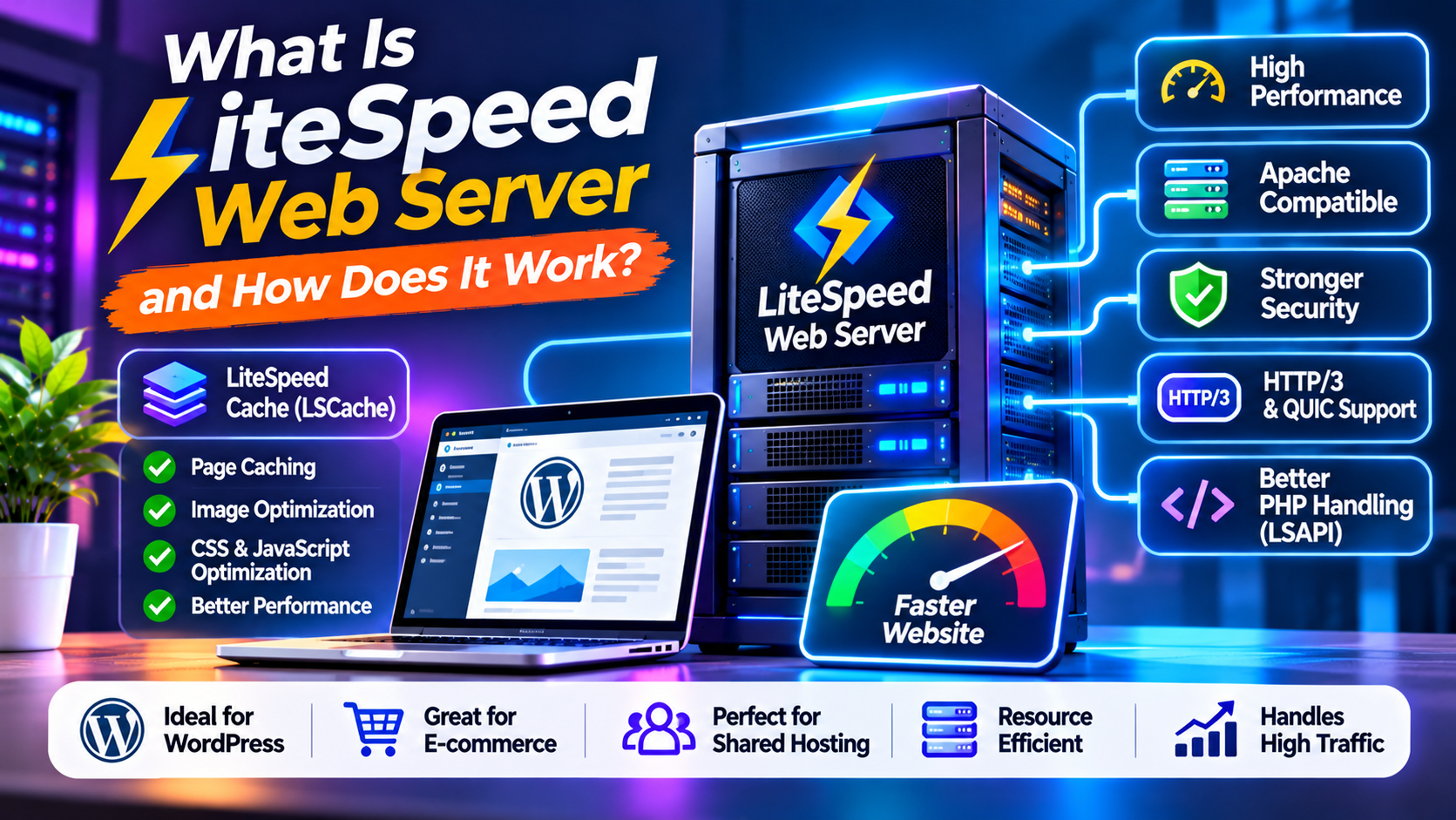
LiteSpeed Web Server is a high-performance web server designed to deliver websites and web applications quickly, efficiently, and securely. It is widely used in the web hosting industry, particularly for shared hosting, WordPress hosting, reseller hosting, and high-traffic websites.
If you have ever searched for ways to improve website loading speed, you may have come across LiteSpeed Web Server and the LiteSpeed Cache plugin. Both technologies can help improve website performance, but they serve different purposes.
In this guide, we will explain what LiteSpeed Web Server is, how it works, its main features, and why hosting providers and website owners use it.
WHAT IS LITESPEED WEB SERVER?
LiteSpeed Web Server (LSWS) is commercial web server software developed by LiteSpeed Technologies. It serves website content to visitors and can act as a replacement for Apache Web Server.
One of its important advantages is compatibility with many existing Apache configurations, including .htaccess files. This makes it easier for hosting providers to migrate websites from Apache without completely changing their hosting environment.
LiteSpeed is designed to handle many simultaneous website connections while using server resources efficiently. It supports modern web technologies such as HTTP/2, HTTP/3, QUIC, and TLS.
It is particularly popular among hosting companies that want to improve performance without rebuilding their entire hosting infrastructure.
HOW DOES LITESPEED WEB SERVER WORK?
When someone visits a website, their browser sends a request to the web server. The server processes the request and delivers the requested website content.
LiteSpeed performs this process using an event-driven architecture.
Instead of relying on a large number of separate processes to handle connections, its event-driven design allows the server to manage many connections efficiently.
Here is a simplified example of how it works:
1. A visitor enters a website address in their browser.
2. The browser sends an HTTP or HTTPS request to the server.
3. LiteSpeed receives and processes the request.
4. If the requested page is cached, LiteSpeed can deliver the stored version.
5. If the page is not cached, the server communicates with the relevant application, such as PHP or WordPress, to generate the content.
6. LiteSpeed delivers the response to the visitor's browser.
This process helps websites handle traffic efficiently and can reduce the workload on the server.
KEY FEATURES OF LITESPEED WEB SERVER
1. HIGH PERFORMANCE
LiteSpeed is designed to handle large numbers of concurrent connections with relatively low resource overhead. Its event-driven architecture helps it manage website traffic efficiently.
This can be particularly useful for shared hosting providers managing hundreds or thousands of websites on a server.
2. LITESPEED CACHE (LSCACHE)
One of LiteSpeed's most useful features is its built-in caching engine.
Caching stores previously generated website content so the server does not need to generate the same page repeatedly.
For example, when a visitor opens a WordPress page for the first time, WordPress may need to process PHP code and retrieve information from its database.
After the page is cached, subsequent visitors can receive the stored HTML version without requiring the same processing every time.
This can reduce server load and improve page loading speed.
3. APACHE COMPATIBILITY
LiteSpeed supports many Apache configurations, including .htaccess rewrite rules.
This is important because many websites and hosting environments already depend on Apache-compatible configurations.
It also supports integration with popular hosting control panels, including cPanel, DirectAdmin, and Plesk.
4. HTTP/3 AND QUIC SUPPORT
Modern websites need efficient communication between browsers and servers.
LiteSpeed supports HTTP/3, which uses the QUIC transport protocol over UDP.
HTTP/3 can improve connection handling, particularly in situations involving network changes or packet loss. However, actual benefits depend on browser support, network conditions, and server configuration.
5. SECURITY FEATURES
LiteSpeed offers several security-related capabilities, including request filtering, ModSecurity integration, connection throttling, and protection against certain application-layer attacks.
These features can help hosting providers protect websites and manage suspicious traffic.
However, LiteSpeed alone does not make a website completely secure. Website owners still need strong passwords, updated software, secure configurations, and appropriate backups.
6. PHP PERFORMANCE
LiteSpeed supports LSAPI, its own server API for communicating with PHP and other applications.
This allows LiteSpeed to process dynamic website requests efficiently and can be beneficial for PHP-based applications such as WordPress, Joomla, and Drupal.
WHAT IS THE LITESPEED CACHE PLUGIN?
LiteSpeed Cache is a separate application-level caching plugin that works with the LiteSpeed Cache engine.
For WordPress websites, the LiteSpeed Cache plugin provides tools to manage caching and optimize website assets.
Some of its capabilities include:
- Page caching.
- Browser caching.
- CSS and JavaScript optimization.
- Image optimization.
- Database cleanup tools.
- Lazy loading.
- Integration with QUIC.cloud services.
An important distinction is that the plugin and the web server are not the same product.
The plugin provides website-level optimization controls, while the LiteSpeed server handles requests and caching at the server level. Some plugin optimization features can also be used with other server environments, but full server-level LSCache functionality requires compatible LiteSpeed infrastructure.
LITESPEED VS APACHE: WHAT IS THE DIFFERENCE?
Apache and LiteSpeed are both widely used web server technologies.
Apache is an established open-source web server with a large ecosystem and extensive configuration options.
LiteSpeed offers Apache compatibility while using its own event-driven architecture and integrated caching engine.
For hosting providers, LiteSpeed can be attractive because it offers modern protocols, efficient connection handling, and compatibility with common hosting configurations.
However, Apache can still be an excellent choice. Actual performance depends on hardware, software configuration, caching, website traffic, and application requirements.
WHO SHOULD USE LITESPEED WEB SERVER?
LiteSpeed can be useful for several types of websites and hosting environments:
- WordPress websites: Websites that want server-level caching and performance optimization.
- E-commerce stores: Online stores that need efficient handling of dynamic pages and visitor traffic.
- Shared hosting providers: Hosting companies managing multiple websites on shared server resources.
- Reseller hosting businesses: Providers looking for efficient web server infrastructure.
- High-traffic websites: Websites that need to handle many simultaneous connections.
- Business websites: Companies looking for performance and modern web server capabilities.
IS LITESPEED WEB SERVER WORTH IT?
LiteSpeed is worth considering if website performance, caching, and efficient server resource usage are important to your hosting environment.
For hosting providers, it can offer useful advantages for managing shared hosting and WordPress workloads. For website owners, a hosting plan using LiteSpeed may provide access to server-level caching and modern web technologies.
However, simply installing LiteSpeed does not guarantee a faster website. Poorly configured caching, inefficient plugins, slow databases, and insufficient server resources can still affect performance.
FINAL THOUGHTS
LiteSpeed Web Server is a powerful web server solution designed to improve website delivery, manage concurrent connections, and support modern web technologies.
Its event-driven architecture, LSCache engine, Apache compatibility, HTTP/3 support, and PHP integration make it a popular option in the web hosting industry.
Whether you operate a WordPress website, an online store, or a hosting business, LiteSpeed can be a valuable part of your infrastructure. The key is to combine it with proper server configuration, caching policies, security practices, and sufficient hardware resources.