
Have you ever typed a premium, exact-match domain name into your browser just to see who owns it? If you look up digitalhub.com, you won't find a tech startup or a parked page waiting for a million-dollar payday.
Instead, you’ll find that it belongs to Apple.
But why is a three-trillion-dollar company sitting on this specific piece of digital real estate? It’s not a teaser for a secret upcoming product. It’s actually a fascinating relic of the strategy that saved the company from bankruptcy.
The 2001 Strategy That Changed Everything
To understand why Apple owns this domain, you have to go back to January 2001.
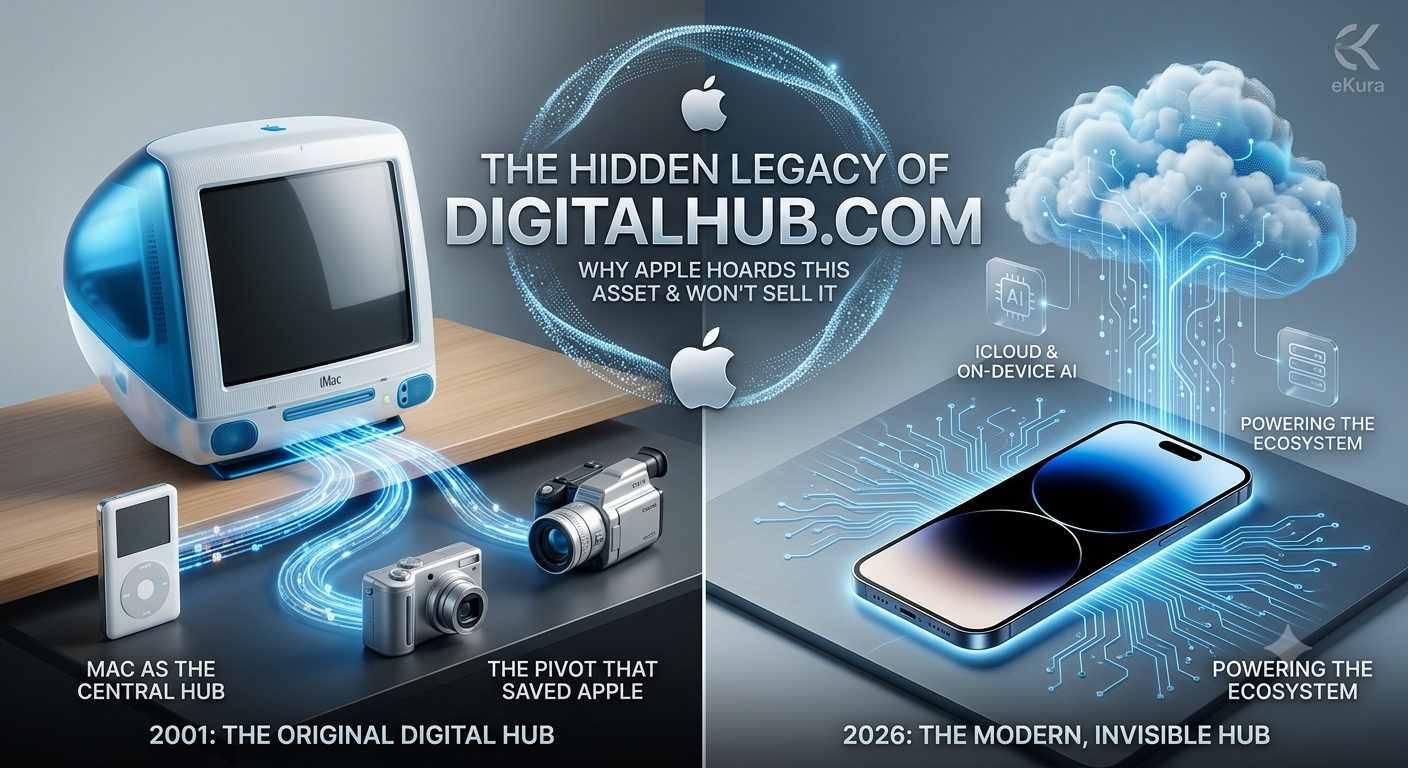
Steve Jobs took the stage and rolled out what he called the "Digital Hub" strategy. At the time, people were starting to buy digital cameras, camcorders, and MP3 players. Jobs envisioned the Mac computer as the central station—the "hub"—where you would plug in all these independent gadgets to sync, edit, and manage your media.
To make this vision a reality, Apple built software like iMovie and iTunes. Then, they created a physical hardware accessory designed specifically to plug into this hub: a portable music player called the iPod.
The iPod became a massive cultural phenomenon, eventually evolving into the iPhone. Apple originally registered digitalhub.com during this era to support the exact corporate vision that sparked their modern dominance.
The Ultimate Digital Real Estate Flex
Today, Apple's strategy has completely shifted. You don't need to plug your iPhone into a Mac for it to work. iCloud has taken over as the invisible, wireless hub that connects the entire Apple ecosystem.
So, why do they still own the domain?
Instead of letting digitalhub.com expire or flipping it on the secondary domain market, Apple simply kept it. Today, the domain isn't used for public marketing; it runs quietly in the background, integrated into Apple's massive global server and content delivery network.
It’s a perfect example of how tech giants manage premium digital real estate. Once they acquire a top-tier, highly brandable asset, they hold onto it forever—long after the original marketing campaign has become tech history.
Instead, you’ll find that it belongs to Apple.
But why is a three-trillion-dollar company sitting on this specific piece of digital real estate? It’s not a teaser for a secret upcoming product. It’s actually a fascinating relic of the strategy that saved the company from bankruptcy.
The 2001 Strategy That Changed Everything
To understand why Apple owns this domain, you have to go back to January 2001.
Steve Jobs took the stage and rolled out what he called the "Digital Hub" strategy. At the time, people were starting to buy digital cameras, camcorders, and MP3 players. Jobs envisioned the Mac computer as the central station—the "hub"—where you would plug in all these independent gadgets to sync, edit, and manage your media.
To make this vision a reality, Apple built software like iMovie and iTunes. Then, they created a physical hardware accessory designed specifically to plug into this hub: a portable music player called the iPod.
The iPod became a massive cultural phenomenon, eventually evolving into the iPhone. Apple originally registered digitalhub.com during this era to support the exact corporate vision that sparked their modern dominance.
The Ultimate Digital Real Estate Flex
Today, Apple's strategy has completely shifted. You don't need to plug your iPhone into a Mac for it to work. iCloud has taken over as the invisible, wireless hub that connects the entire Apple ecosystem.
So, why do they still own the domain?
Instead of letting digitalhub.com expire or flipping it on the secondary domain market, Apple simply kept it. Today, the domain isn't used for public marketing; it runs quietly in the background, integrated into Apple's massive global server and content delivery network.
It’s a perfect example of how tech giants manage premium digital real estate. Once they acquire a top-tier, highly brandable asset, they hold onto it forever—long after the original marketing campaign has become tech history.