
Shared Hosting vs VPS Hosting: Which Is Better?
Choosing between shared hosting and VPS hosting can be confusing, especially if you are building your first website. Both options allow you to publish a website online, but they differ in price, performance, flexibility, and technical requirements.
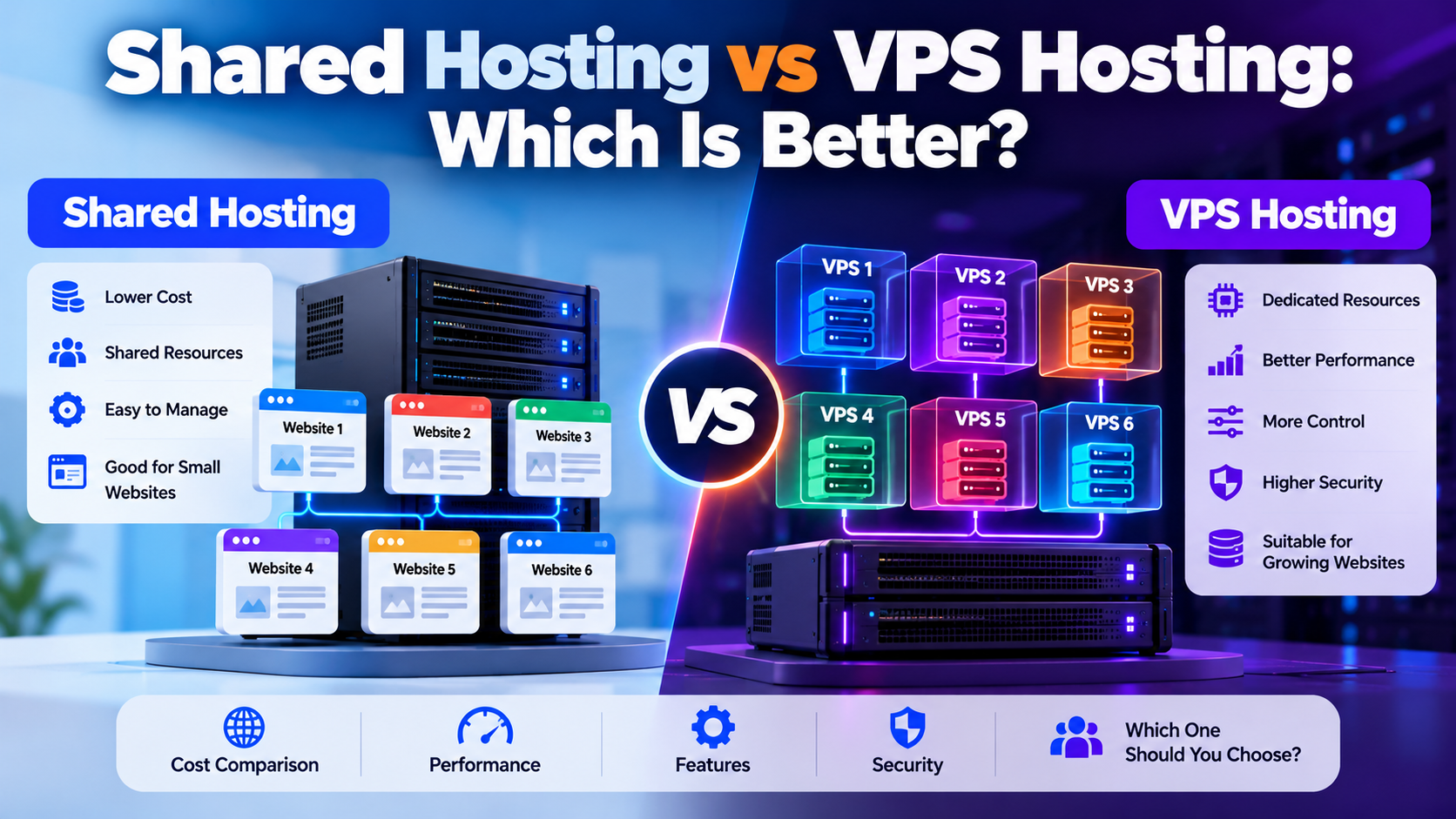
Shared hosting is usually affordable and beginner-friendly, while VPS hosting provides more control and allocated server resources. But which one is right for your website?
In this guide, we compare shared hosting vs VPS hosting to help you make the right decision based on your budget, website size, and technical needs.
What Is Shared Hosting?
Shared hosting is a web hosting service where multiple websites use resources from the same physical server. The hosting provider manages the server, while customers manage their websites through tools such as cPanel.
Think of shared hosting like living in an apartment building. You have your own space, but you share the building's infrastructure with other residents.
Advantages of Shared Hosting
- Affordable pricing: Shared hosting is generally one of the cheapest ways to host a website.
- Easy management: Most plans include a control panel for managing domains, email accounts, databases, and website files.
- Beginner-friendly: You do not usually need advanced server administration skills.
- Less maintenance: The hosting provider handles much of the underlying server maintenance.
Disadvantages of Shared Hosting
Shared hosting has some limitations. Resources are shared among multiple websites, and heavy usage can sometimes affect performance. You also have less control over server settings and may face limits on memory, CPU usage, or supported software.
Shared hosting is still a good option for many small websites, provided the plan offers sufficient resources and is managed well.
What Is VPS Hosting?
VPS stands for Virtual Private Server. VPS hosting uses virtualization technology to create separate virtual server environments on a physical server.
Each VPS receives an allocation of resources such as RAM, CPU capacity, and storage. Many plans also provide root or administrator access, giving you more control over software and server configuration.
Think of a VPS as having your own apartment with more independence and control, while still sharing the larger building's infrastructure.
Advantages of VPS Hosting
- More control: Configure server settings and install compatible software.
- Allocated resources: RAM, CPU, and storage are assigned to your virtual server.
- Greater flexibility: Suitable for custom applications, databases, APIs, and growing websites.
- Scalability: Many providers let you upgrade resources as your needs increase.
- Custom configurations: You can often choose an operating system and configure your preferred software environment.
Disadvantages of VPS Hosting
VPS hosting generally costs more than shared hosting. An unmanaged VPS also requires technical knowledge to handle security updates, firewall settings, monitoring, backups, and troubleshooting. Managed VPS plans can reduce this workload, depending on what the provider includes.
Remember that a VPS is not automatically faster or more secure. Its performance and security depend on the hardware, provider configuration, and server maintenance.
Shared Hosting vs VPS Hosting: Key Differences
1. Price
Shared hosting is usually cheaper because many customers share the cost of the underlying server. It is suitable for beginners and small websites with limited budgets.
VPS hosting generally costs more because it provides an isolated virtual environment and allocated resources. Additional services such as backups, control panels, and Windows licensing may increase the cost.
2. Performance
With shared hosting, website performance can be affected by resource limits and activity on the server.
VPS hosting provides more control over resource allocation, making it useful for websites and applications with greater demands. However, actual speed depends on CPU performance, storage, network quality, and server configuration.
3. Security
In shared hosting, the provider manages the server environment and its isolation controls. You are still responsible for securing your website, passwords, themes, plugins, and applications.
VPS hosting offers more control over security settings, but an unmanaged VPS places more responsibility on you to configure and maintain those protections.
Neither option is automatically more secure than the other.
4. Technical Knowledge
Shared hosting is generally easier for beginners because the provider handles most server-level administration.
An unmanaged VPS requires more technical knowledge. A managed VPS may be easier to use because the provider handles some administrative tasks.
5. Flexibility and Scalability
Shared hosting usually limits the software and server configurations available to customers. If your website grows beyond those limits, you may need to upgrade or migrate.
VPS hosting generally provides more flexibility, and many providers allow you to increase RAM, CPU, or storage when needed.
Which Is Better for WordPress?
Both shared hosting and VPS hosting can run WordPress websites.
If you are starting a personal blog, portfolio, or small business website, shared hosting is often sufficient. It is affordable and lets you focus on publishing content instead of managing a server.
A VPS may be more suitable for a growing WordPress website that needs additional resources, custom server settings, or greater control over caching and software.
Before upgrading, check whether slow performance comes from your hosting plan or from other issues, such as oversized images, inefficient plugins, or an unoptimized theme.
Which Hosting Is Best for Your Needs?
Choose shared hosting if:
- You are launching your first website.
- You run a blog or small business website.
- You have a limited budget.
- You prefer easy management without server administration.
Choose VPS hosting if:
- Your website regularly reaches its hosting resource limits.
- You need root or administrator access.
- Your application requires custom software or server settings.
- You run multiple websites or resource-intensive applications.
- You want more control over your hosting environment.
For a small website, shared hosting may provide everything you need. For developers, growing businesses, and applications with specialized requirements, a VPS can offer greater flexibility.
Can You Upgrade From Shared Hosting to VPS?
Yes. Many website owners start with shared hosting and upgrade when their websites grow.
Before migrating, back up your website files and databases, check software compatibility, and plan the transfer of email accounts and DNS records if necessary. Some hosting providers offer migration assistance.
You do not need to purchase a VPS simply because your website becomes more popular. Review your actual resource usage and upgrade when you have a clear reason.
Frequently Asked Questions
Is VPS hosting always faster than shared hosting?
No. VPS hosting offers more control over allocated resources, but performance depends on the provider, hardware, configuration, and workload. A well-managed shared hosting plan can outperform a poorly configured VPS.
Is shared hosting good for beginners?
Yes. Shared hosting is affordable, relatively easy to manage, and suitable for many small websites.
Is VPS hosting worth the extra cost?
It can be worth it if you need greater control, additional resources, or custom software. If your website works well on shared hosting, upgrading may not provide enough benefit to justify the extra expense.
Can I host multiple websites on a VPS?
Yes, provided the server has sufficient resources and is configured correctly. A compatible hosting control panel can simplify management, although some panels require an additional license.
Final Verdict
When comparing shared hosting vs VPS hosting, the best option depends on your website's requirements, budget, and technical skills.
Shared hosting is best for affordability and simplicity. VPS hosting is best when you need more control, flexibility, and allocated resources.
Start with the hosting plan that meets your current needs, monitor your website's performance, and upgrade
 when your requirements justify it. Choosing the right hosting plan can help you avoid unnecessary costs while giving your website room to grow.
Choosing between shared hosting and VPS hosting can be confusing, especially if you are building your first website. Both options allow you to publish a website online, but they differ in price, performance, flexibility, and technical requirements.
Shared hosting is usually affordable and beginner-friendly, while VPS hosting provides more control and allocated server resources. But which one is right for your website?
In this guide, we compare shared hosting vs VPS hosting to help you make the right decision based on your budget, website size, and technical needs.
What Is Shared Hosting?
Shared hosting is a web hosting service where multiple websites use resources from the same physical server. The hosting provider manages the server, while customers manage their websites through tools such as cPanel.
Think of shared hosting like living in an apartment building. You have your own space, but you share the building's infrastructure with other residents.
Advantages of Shared Hosting
- Affordable pricing: Shared hosting is generally one of the cheapest ways to host a website.
- Easy management: Most plans include a control panel for managing domains, email accounts, databases, and website files.
- Beginner-friendly: You do not usually need advanced server administration skills.
- Less maintenance: The hosting provider handles much of the underlying server maintenance.
Disadvantages of Shared Hosting
Shared hosting has some limitations. Resources are shared among multiple websites, and heavy usage can sometimes affect performance. You also have less control over server settings and may face limits on memory, CPU usage, or supported software.
Shared hosting is still a good option for many small websites, provided the plan offers sufficient resources and is managed well.
What Is VPS Hosting?
VPS stands for Virtual Private Server. VPS hosting uses virtualization technology to create separate virtual server environments on a physical server.
Each VPS receives an allocation of resources such as RAM, CPU capacity, and storage. Many plans also provide root or administrator access, giving you more control over software and server configuration.
Think of a VPS as having your own apartment with more independence and control, while still sharing the larger building's infrastructure.
Advantages of VPS Hosting
- More control: Configure server settings and install compatible software.
- Allocated resources: RAM, CPU, and storage are assigned to your virtual server.
- Greater flexibility: Suitable for custom applications, databases, APIs, and growing websites.
- Scalability: Many providers let you upgrade resources as your needs increase.
- Custom configurations: You can often choose an operating system and configure your preferred software environment.
Disadvantages of VPS Hosting
VPS hosting generally costs more than shared hosting. An unmanaged VPS also requires technical knowledge to handle security updates, firewall settings, monitoring, backups, and troubleshooting. Managed VPS plans can reduce this workload, depending on what the provider includes.
Remember that a VPS is not automatically faster or more secure. Its performance and security depend on the hardware, provider configuration, and server maintenance.
Shared Hosting vs VPS Hosting: Key Differences
1. Price
Shared hosting is usually cheaper because many customers share the cost of the underlying server. It is suitable for beginners and small websites with limited budgets.
VPS hosting generally costs more because it provides an isolated virtual environment and allocated resources. Additional services such as backups, control panels, and Windows licensing may increase the cost.
2. Performance
With shared hosting, website performance can be affected by resource limits and activity on the server.
VPS hosting provides more control over resource allocation, making it useful for websites and applications with greater demands. However, actual speed depends on CPU performance, storage, network quality, and server configuration.
3. Security
In shared hosting, the provider manages the server environment and its isolation controls. You are still responsible for securing your website, passwords, themes, plugins, and applications.
VPS hosting offers more control over security settings, but an unmanaged VPS places more responsibility on you to configure and maintain those protections.
Neither option is automatically more secure than the other.
4. Technical Knowledge
Shared hosting is generally easier for beginners because the provider handles most server-level administration.
An unmanaged VPS requires more technical knowledge. A managed VPS may be easier to use because the provider handles some administrative tasks.
5. Flexibility and Scalability
Shared hosting usually limits the software and server configurations available to customers. If your website grows beyond those limits, you may need to upgrade or migrate.
VPS hosting generally provides more flexibility, and many providers allow you to increase RAM, CPU, or storage when needed.
Which Is Better for WordPress?
Both shared hosting and VPS hosting can run WordPress websites.
If you are starting a personal blog, portfolio, or small business website, shared hosting is often sufficient. It is affordable and lets you focus on publishing content instead of managing a server.
A VPS may be more suitable for a growing WordPress website that needs additional resources, custom server settings, or greater control over caching and software.
Before upgrading, check whether slow performance comes from your hosting plan or from other issues, such as oversized images, inefficient plugins, or an unoptimized theme.
Which Hosting Is Best for Your Needs?
Choose shared hosting if:
- You are launching your first website.
- You run a blog or small business website.
- You have a limited budget.
- You prefer easy management without server administration.
Choose VPS hosting if:
- Your website regularly reaches its hosting resource limits.
- You need root or administrator access.
- Your application requires custom software or server settings.
- You run multiple websites or resource-intensive applications.
- You want more control over your hosting environment.
For a small website, shared hosting may provide everything you need. For developers, growing businesses, and applications with specialized requirements, a VPS can offer greater flexibility.
Can You Upgrade From Shared Hosting to VPS?
Yes. Many website owners start with shared hosting and upgrade when their websites grow.
Before migrating, back up your website files and databases, check software compatibility, and plan the transfer of email accounts and DNS records if necessary. Some hosting providers offer migration assistance.
You do not need to purchase a VPS simply because your website becomes more popular. Review your actual resource usage and upgrade when you have a clear reason.
Frequently Asked Questions
Is VPS hosting always faster than shared hosting?
No. VPS hosting offers more control over allocated resources, but performance depends on the provider, hardware, configuration, and workload. A well-managed shared hosting plan can outperform a poorly configured VPS.
Is shared hosting good for beginners?
Yes. Shared hosting is affordable, relatively easy to manage, and suitable for many small websites.
Is VPS hosting worth the extra cost?
It can be worth it if you need greater control, additional resources, or custom software. If your website works well on shared hosting, upgrading may not provide enough benefit to justify the extra expense.
Can I host multiple websites on a VPS?
Yes, provided the server has sufficient resources and is configured correctly. A compatible hosting control panel can simplify management, although some panels require an additional license.
Final Verdict
When comparing shared hosting vs VPS hosting, the best option depends on your website's requirements, budget, and technical skills.
Shared hosting is best for affordability and simplicity. VPS hosting is best when you need more control, flexibility, and allocated resources.
Start with the hosting plan that meets your current needs, monitor your website's performance, and upgrade